Fire Suppression Installation in Riverside County: What to Know
If you manage commercial or industrial property in Riverside County and need a fire suppression system installed, the question is not just who can do the work. It is who will still be accountable when the AHJ walks through, when the NFPA inspection comes due, and when your insurer asks for documentation. Those are three different moments, and most contractors are only built for one of them.
What Fire Suppression Installation Actually Involves in Riverside County
Fire suppression system installation in Riverside County is governed by a combination of California Fire Code, local AHJ requirements, and NFPA standards.
The installation process moves through several distinct phases: hydraulic design and engineering, permit submittal to the local AHJ, fabrication of pipe assemblies, installation by licensed technicians, and a final acceptance test witnessed by the fire authority. Each phase has its own timeline, its own documentation requirements, and its own approval gate. A contractor who handles only the physical installation hands off accountability at every other stage.
"A contractor who handles only the physical installation hands off accountability at every other stage. That gap is where compliance failures happen."
For property managers overseeing multiple sites, the coordination burden compounds quickly. Different buildings may fall under the City of Riverside, the County of Riverside, the City of Murrieta, or any number of other jurisdictions, each with its own plan check process and inspection schedule. Getting a single system installed is manageable. Keeping five or six systems compliant across different AHJs, without a unified contractor, is where things quietly fall apart.
Why Local AHJ Familiarity Changes the Timeline
Riverside County's fire protection landscape is not uniform. The Riverside County Fire Department serves unincorporated areas and several contract cities, but incorporated cities like Riverside, Corona, and Temecula maintain their own fire departments with their own plan check reviewers and field inspectors. Each jurisdiction interprets California Fire Code amendments slightly differently, and some have specific local amendments that affect sprinkler head spacing, water supply requirements, or suppression agent selection.
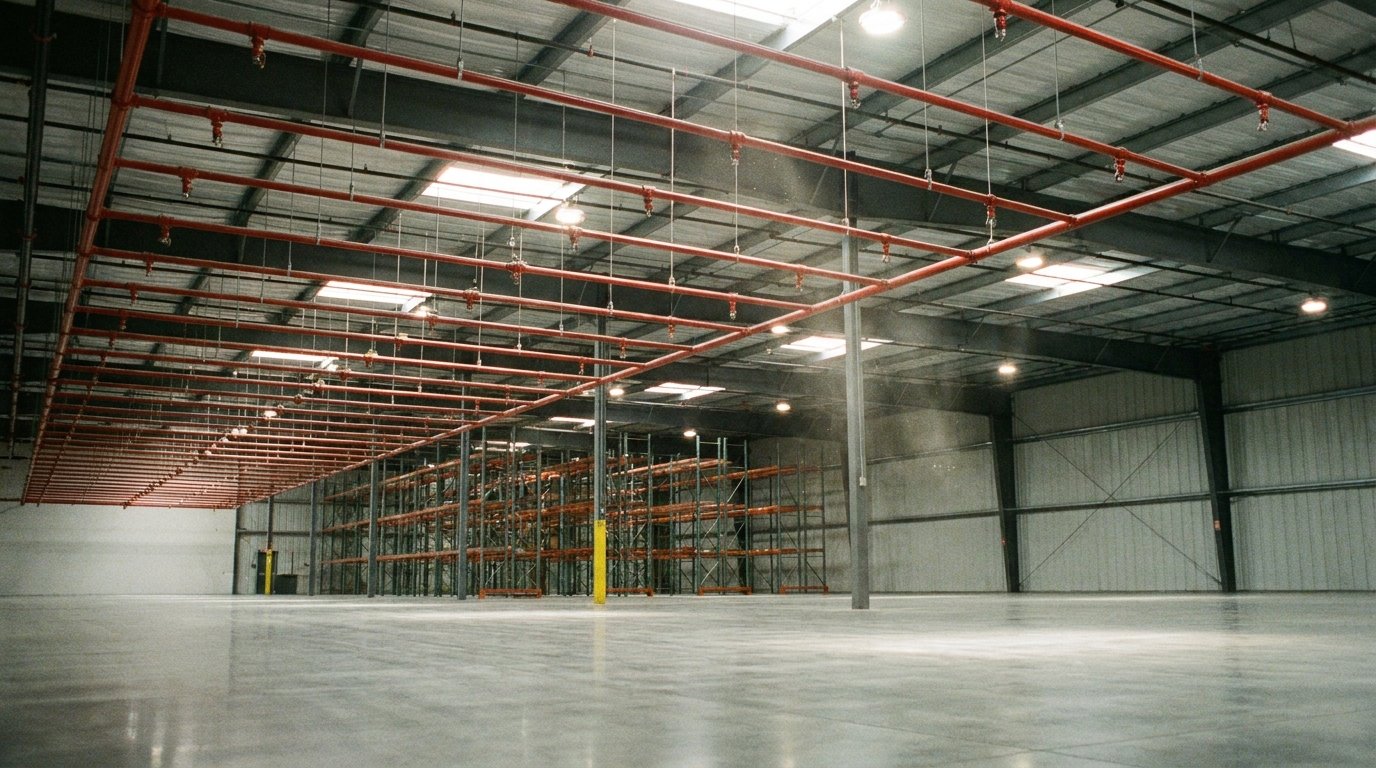
A contractor who has worked repeatedly with Riverside County Fire, the City of Temecula Fire Prevention Bureau, and the Murrieta Fire and Rescue Department knows how each office wants plans submitted, what documentation they require at final inspection, and how to respond to a correction notice without losing weeks on the schedule. That familiarity is not a minor convenience: on a time-sensitive project, it is the difference between a 30-day permit cycle and a 90-day one.
Alternative Fire Protection Service is based in Lake Elsinore, at the center of the Inland Empire's commercial corridor. That location is not incidental. It means the team operates daily in the same jurisdictions where your properties sit, and has built direct working relationships with the AHJs that govern compliance for sites across Riverside, San Bernardino, Orange, and San Diego Counties.
The Full Lifecycle Problem Most Property Managers Do Not See Coming
Here is the contract structure that creates the most exposure for multi-site property managers in Southern California. You hire a licensed installer for the suppression system. You hire a separate inspection company for the annual NFPA test. You call a third vendor when a component needs repair. None of them has full visibility into the system's history, and none of them owns the outcome when something is out of compliance.
Single-contractor accountability is not a convenience. It is a risk management decision.
When the AHJ issues a deficiency notice, the installer says it is an inspection issue. The inspection company says it is a maintenance issue. The maintenance vendor says the system was installed incorrectly. That loop is not hypothetical. It is what happens when accountability is fragmented across vendors who have no contractual relationship with each other and no incentive to own the full picture.
Alternative Fire Protection Service provides full-lifecycle fire protection under a single accountable relationship. That means the same team that designs and installs your suppression system is also the team that inspects it, maintains it, and responds when something needs attention. There is no handoff point where accountability disappears.
For commercial and industrial property managers in Southern California, that matters in a specific way right now. The 2026 edition of NFPA 25, the standard governing inspection, testing, and maintenance of water-based fire protection systems, is the active baseline reference for sprinkler and suppression system ITM. Insurers and AHJs are aligning their expectations to it. A contractor who designed and installed your system and who also performs NFPA 25-compliant inspections brings continuity that an inspection-only vendor structurally cannot.
What System Types Alternative Fire Protection Installs
Not every suppression contractor in Riverside County covers every system type. Many specialize in wet pipe sprinklers for standard occupancies and refer out for anything more complex. That referral model works for single-building owners. For portfolio managers, it creates another vendor relationship to manage and another gap in accountability.
Alternative Fire Protection Service provides design, fabrication, installation, service, and inspections for:
- Fire sprinkler systems (wet pipe, dry pipe, pre-action, and deluge configurations for commercial and industrial occupancies)
- Fire suppression systems (clean agent, CO2, and dry chemical for special hazard environments including server rooms, paint booths, and manufacturing equipment)
That full-system capability is what makes a single-contractor model viable for complex commercial and industrial properties. A warehouse with a standard wet pipe system, a server room requiring clean agent suppression, and a break room kitchen with a hood system is not a job for three separate contractors. It is a job for one contractor who is licensed and experienced across all three.
"A warehouse with three different suppression environments is not a job for three separate contractors. It is a job for one contractor who is licensed across all three."
The company originated as a fabrication shop in 1987, which means in-house pipe fabrication is part of the capability rather than a subcontracted element. For large commercial or industrial installations where custom pipe assemblies are required, that in-house capacity affects both lead time and quality control.
Wildfire Season and Suppression System Readiness in Riverside County
Riverside County sits in one of the most fire-exposed commercial corridors in California. The Ridge Fire in Los Angeles County in August 2026, along with multiple other active incidents across the state, underscores what CAL FIRE and county fire departments have been emphasizing for years: wildfire is a year-round operational risk in Southern California, not a seasonal one.
For commercial and industrial property managers, that risk intersects with fire suppression system readiness in a direct way. A suppression system that has missed an inspection cycle, has an impaired valve, or has an outdated water supply calculation is not just a code problem. During elevated fire activity, it is a genuine life-safety exposure.
Pre-season impairment planning, hydrant flow verification, and suppression system testing before peak Santa Ana conditions are not bureaucratic exercises. They are the practical steps that keep a system operational when it is most likely to be needed. A contractor with local Inland Empire presence and year-round familiarity with Riverside County's fire environment is better positioned to help you build that calendar than a national contractor scheduling from a regional hub.
How the Compliance Assessment Works
For property managers who are either onboarding a new site or taking stock of where their current systems stand, the starting point is a compliance assessment. Alternative Fire Protection Service conducts on-site reviews of existing suppression and fire protection systems, identifies deficiencies relative to current NFPA standards and local AHJ requirements, and produces a clear picture of what needs to be addressed and in what sequence.
That assessment is the document that answers the question your insurer, your AHJ, and your risk team will eventually ask: do you know the actual condition of every fire system across every site you manage? For a multi-site portfolio in Riverside, San Bernardino, Orange, and San Diego Counties, having that answer in writing, backed by a licensed contractor who will own the remediation work, is a different kind of confidence than hoping the last inspection vendor got it right.
Single-contractor accountability from design through ongoing compliance, across a portfolio that spans Southern California, is what Alternative Fire Protection Service is built to deliver. If your Riverside County properties need a suppression system installed, inspected, or brought into compliance, the conversation starts at alternativefire.com/contact.
Frequently Asked Questions
What permits are required to install a fire suppression system in Riverside County? Most commercial and industrial fire suppression installations in Riverside County require a fire protection permit from the local AHJ, which may be Riverside County Fire, a city fire department, or both depending on jurisdiction. The permit process typically involves plan check review of hydraulic calculations and system drawings before installation begins, followed by a final acceptance inspection. Working with a contractor who is familiar with the specific AHJ for your site reduces plan check cycles and avoids common correction notice delays.
How long does fire suppression system installation take in Riverside County? Timeline depends on system type, occupancy size, and AHJ plan check workload. A straightforward wet pipe sprinkler system for a mid-size commercial space may move from permit submittal to final inspection in six to ten weeks under normal conditions. Larger industrial systems, special hazard suppression applications, or projects in jurisdictions with longer plan check queues will take longer. A contractor with established AHJ relationships and in-house fabrication capacity can compress parts of that timeline.
Does Alternative Fire Protection Service handle both installation and ongoing inspections? Yes. Alternative Fire Protection Service provides the full lifecycle: design, fabrication, installation, service, and recurring NFPA-compliant inspections and maintenance. This means the same contractor who installs your suppression system also performs the annual and periodic inspections required by NFPA 25 and your local AHJ, with no handoff between vendors and no gap in documentation continuity.
What fire suppression system types does Alternative Fire Protection install for industrial properties? Alternative Fire Protection installs wet pipe, dry pipe, pre-action, and deluge sprinkler systems, as well as clean agent, CO2, and dry chemical special hazard suppression systems for environments including server rooms, paint booths, and manufacturing equipment. Full-system capability across a single contract is what makes them a practical choice for industrial properties with multiple suppression environments.
Can one contractor really handle fire protection across multiple sites in different Southern California counties? Alternative Fire Protection Service is licensed and actively serving commercial and industrial properties across San Diego, Orange, Riverside, and San Bernardino Counties from their base in Lake Elsinore. For portfolio managers with sites in multiple jurisdictions, they provide a single inspection calendar, unified documentation, and one point of contact across all locations. That consolidation eliminates the vendor coordination overhead that creates compliance gaps for multi-site operators.
Research sources4
Live web research informed this article. These are the sources it drew on.
- Fire Code - Riverside, Californiaaquarius.riversideca.gov
- RIVERSIDE COUNTYplanning.rctlma.org
- Alternative Fire Protection Servicesbuildzoom.com2025-05-28
- Alternative Fire Protection Services | BBB Business Profile | Better Business Bureaubbb.org2022-04-18