One Contractor for Every Fire System You Own
Most commercial property managers in Southern California are not one vendor short of a complete fire protection program. They are one accountability gap away from a correction notice that has their name on it, not their contractor's.
The Problem With Specialized Vendors
The logic seems sound at first. Hire a sprinkler specialist for the sprinklers. Each one, in theory, knows their system type better than anyone.
In practice, what you have built is a coordination problem that none of those vendors are responsible for solving. When your insurance carrier asks for a unified compliance record before renewal and you have four separate inspection reports in four different formats from four companies that have never spoken to each other, you are the one assembling that package at eleven at night.
The correction notice has your name on it. Not your contractor's. That is the structural flaw in managing fire protection through fragmented vendor relationships, and it does not go away until accountability lives in one place.
This is not a hypothetical. It is the operational reality for the majority of multi-site commercial property managers in Southern California right now. The 2025 California Fire Code changes and tightening NFPA 25 enforcement cycles have made the documentation gaps in fragmented vendor models harder to hide. AHJs in Riverside and San Bernardino Counties are not just checking systems. They are checking records, test intervals, and whether the person responsible for the property can produce a coherent compliance history on request.
What a Turnkey Fire Protection Company Actually Does
Turnkey means the contractor owns the entire lifecycle of your fire protection program. That means system design and engineering for new construction or retrofit, fabrication, installation, ongoing service, recurring inspections across every system type, AHJ coordination, and the compliance documentation that satisfies both the fire marshal and your insurance underwriter.
For a multi-site commercial or industrial property manager, the practical difference is this: one contract, one point of contact, one inspection calendar, one documentation package, and one contractor who is accountable for the outcome across every system on every property.
Alternative Fire Protection Service, based in Lake Elsinore, California, is structured specifically around this model. They serve commercial and industrial properties across San Diego, Orange, Riverside, and San Bernardino Counties under a single-contractor, full-lifecycle relationship.
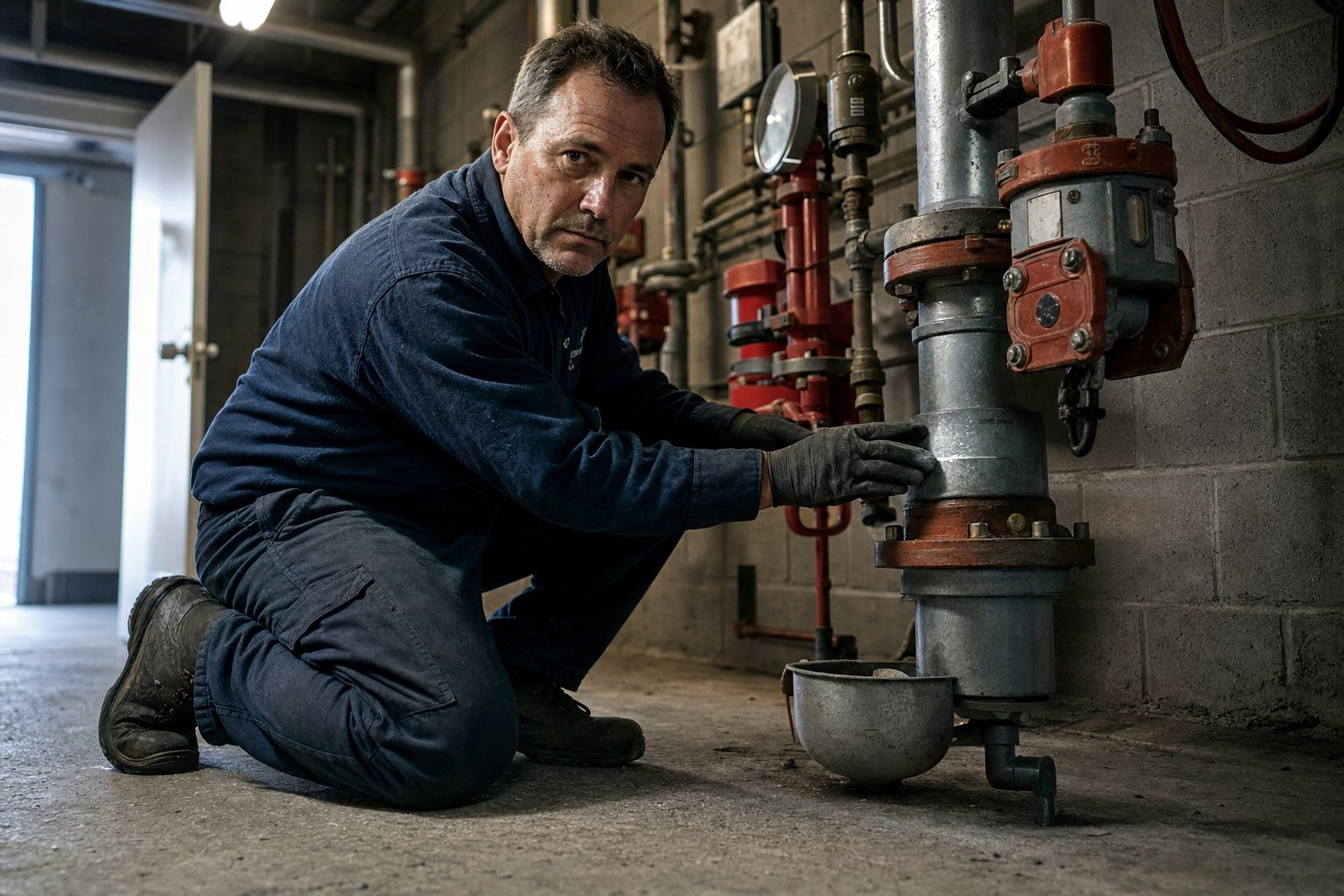
The company was founded as a fabrication shop in 1987 and has operated continuously in Southern California for more than thirty years. They hold a California Contractors State License Board C-16 Fire Protection license. Their base in Lake Elsinore is not incidental. It means direct familiarity with local AHJ relationships in the Inland Empire, the specific code interpretation timelines for Riverside and San Bernardino Counties, and the enforcement posture that national contractors managing accounts from a distance cannot replicate.
As one client, Michael Ellena, described it: "Bryan came in and did what he said. No mess and passed all inspections for everything the first time."
Why Southern California Makes This More Complex
California fire protection compliance is not a single set of rules applied uniformly across the state. It is a layered system of overlapping requirements under the California Fire Code, Title 19 of the California Code of Regulations, and adopted NFPA standards, interpreted and enforced differently by each local Authority Having Jurisdiction.
For property managers with sites in multiple counties, this creates a real operational burden. San Diego, Orange, Riverside, and San Bernardino Counties each have different AHJ offices, different code adoption timelines, and different correction notice formats. A contractor based in San Diego may know their local AHJ relationships well but have no meaningful familiarity with how Riverside County enforces NFPA 25 inspection intervals on high-piled storage facilities. A national platform managing your account from a call center in another state has no relationship with any of them.
Inspection records must be retained on-site for at least five years, and deficiencies discovered during inspection must be corrected promptly.
A contractor who knows your AHJ before they walk in the door is not a convenience. In a multi-county portfolio, it is the difference between a passed inspection and a correction notice that costs you three weeks and a reinspection fee.
Handling all of this with multiple vendors, each operating on their own schedule, using their own report format, and accountable only for their slice of the system, is where compliance gaps form. Not from negligence. From the structural reality that nobody is watching the whole picture.
What Single-Contractor Accountability Actually Looks Like
When Alternative Fire Protection Service takes on a commercial or industrial property, the relationship covers design and engineering if new systems are needed, fabrication, installation, ongoing service and corrective repair, and every scheduled inspection across every system type. One annual service agreement. One contact for deficiency resolution. One documentation package formatted for the specific county AHJ.
For property managers overseeing multiple sites, this means a single inspection calendar across the entire portfolio, consistent reporting formats that make insurance audits manageable, and a contractor who is accountable for the outcome rather than accountable for one piece of it.
Single-contractor accountability from design through ongoing compliance is not a premium option. It is the only model where someone other than you is responsible for the whole picture.
The practical value of this model surfaces most clearly in moments of failure. When a system triggers a correction notice, there is no finger-pointing between vendors. When an insurance carrier requests a unified compliance record, there is one. When a new code requirement creates a gap in an existing system, there is one contractor who knows every system on every property and can assess the exposure across the entire portfolio.
Paul Van Gaale of Peter Van Gaale and Sons Construction described working with the company this way: "From preliminary design to completion, they have always done an excellent job for our company and for our customers." His firm has used Alternative Fire Protection Service for over thirty years across custom home building, commercial, and tenant improvement work.
What to Ask Any Fire Protection Contractor Before You Sign
If you are evaluating fire protection contractors for a commercial or industrial portfolio, the questions that separate a genuine turnkey provider from a vendor who uses the word loosely are specific.
First, ask what system types they are licensed and equipped to handle under a single contract, because if they are a general contractor with subcontractors, the accountability gap is still there, just one layer deeper.
Second, ask about their AHJ relationships in the specific counties where your properties are located. Familiarity with local enforcement posture is not something you can replicate through code literacy alone. It comes from active accounts and direct relationships with the inspectors and offices who will be reviewing your documentation.
Third, ask how deficiencies discovered during inspection are handled. Who is responsible for corrective work? What is the response time commitment? Is there a single point of contact for every system type, or do you start making calls to figure out whose problem it is?
Fourth, ask about documentation. What format do inspection reports take? How quickly are they delivered after the inspection is completed? Are they formatted for your specific county AHJ, or is it a generic report you have to interpret yourself?
Frequently Asked Questions
What does a turnkey fire protection company actually cover? A genuine turnkey fire protection contractor handles the full lifecycle of your fire protection systems: design, fabrication, installation, ongoing service, recurring inspections across every system type, AHJ coordination, and compliance documentation. It means one contractor is accountable for every stage rather than multiple vendors each responsible for one piece.
Yes, when the contractor is structured and licensed for multi-discipline work, though the quality question is a reasonable one. The accountability gap in fragmented vendor relationships is the more common source of compliance failures than any individual contractor's technical depth.
What are the inspection requirements for commercial fire systems in California? California commercial properties are subject to overlapping requirements under the California Fire Code, Title 19, and adopted NFPA standards. Water-based sprinkler systems must be inspected per NFPA 25 cycles. Inspection records must be retained on-site for at least five years.
How does a single-contractor model help with multi-site portfolio management? It consolidates inspection scheduling, documentation, and deficiency resolution under one relationship. Instead of coordinating multiple vendors across different properties, one contractor manages every system on every site, provides consistent reporting formats, and is accountable for the compliance outcome across the entire portfolio.
Why does it matter that a contractor is based locally in the Inland Empire? Local AHJ familiarity is a practical compliance advantage. Each county's fire marshal office interprets and enforces code requirements differently, and a contractor with active accounts in Riverside, San Bernardino, Orange, and San Diego Counties has direct working knowledge of those enforcement postures. A national contractor managing accounts remotely does not have those relationships, and the difference shows when a correction notice needs to be resolved quickly.
The Right Time to Consolidate Is Before the Next Inspection
The moment a property manager discovers a compliance gap is rarely the right moment to evaluate contractors. It is the most expensive and time-pressured version of that conversation. The right moment is before the next inspection cycle, before the next AHJ visit, before the next insurance renewal.
Alternative Fire Protection Service provides NFPA-compliant, fully managed fire safety for commercial and industrial properties across San Diego, Orange, Riverside, and San Bernardino Counties from their base in Lake Elsinore. Single-contractor accountability from design through ongoing compliance is not a sales pitch. It is the structural difference between a fire protection program that holds up under scrutiny and one that generates correction notices and coordination overhead every time it is tested.
If you manage a commercial or industrial portfolio in Southern California and you are currently coordinating multiple fire protection vendors, the compliance gap is already there. The question is whether you find it before the AHJ does.
Request a compliance assessment for your portfolio
Research sources4
Live web research informed this article. These are the sources it drew on.
- Alternative Fire Protection Services | BBB Business Profile | Better Business Bureaubbb.org2022-04-18
- Alternative Fire Protection Service (Afps) - 29160 Goetz Rdmapquest.com2025-11-19
- Active Fire Protection Systems & Owner/maintenance Obligationsgocodebook.com
- Alternative Fire Protection Servicesbuildzoom.com2025-05-28