Signs Your Fire Sprinkler System Needs Attention
Fire Safety, Commercial Buildings
Signs Your Building’s Fire Sprinkler System Needs Attention
For local businesses, a reliable fire sprinkler system is more than a code requirement—it is a frontline defense for your people, property, and operations. Recognizing early warning signs that your system needs attention can prevent costly damage, unplanned downtime, and serious safety risks.
1. Visible Corrosion, Rust, or Discoloration on Sprinkler Heads and Pipes
Sprinkler systems are designed to sit quietly in the background for years, but they are not immune to wear. If you notice rust, greenish stains, white crust, or other discoloration on sprinkler heads, pipes, or fittings, it can signal corrosion inside the system. Corrosion weakens metal, clogs openings, and may cause sprinklers to fail when they are needed most—or to leak unexpectedly over inventory, computers, or customer areas. Any visible corrosion is a clear cue to schedule a professional inspection and possible cleaning, repair, or replacement of affected components.
2. Leaks, Drips, or Unexplained Water Stains
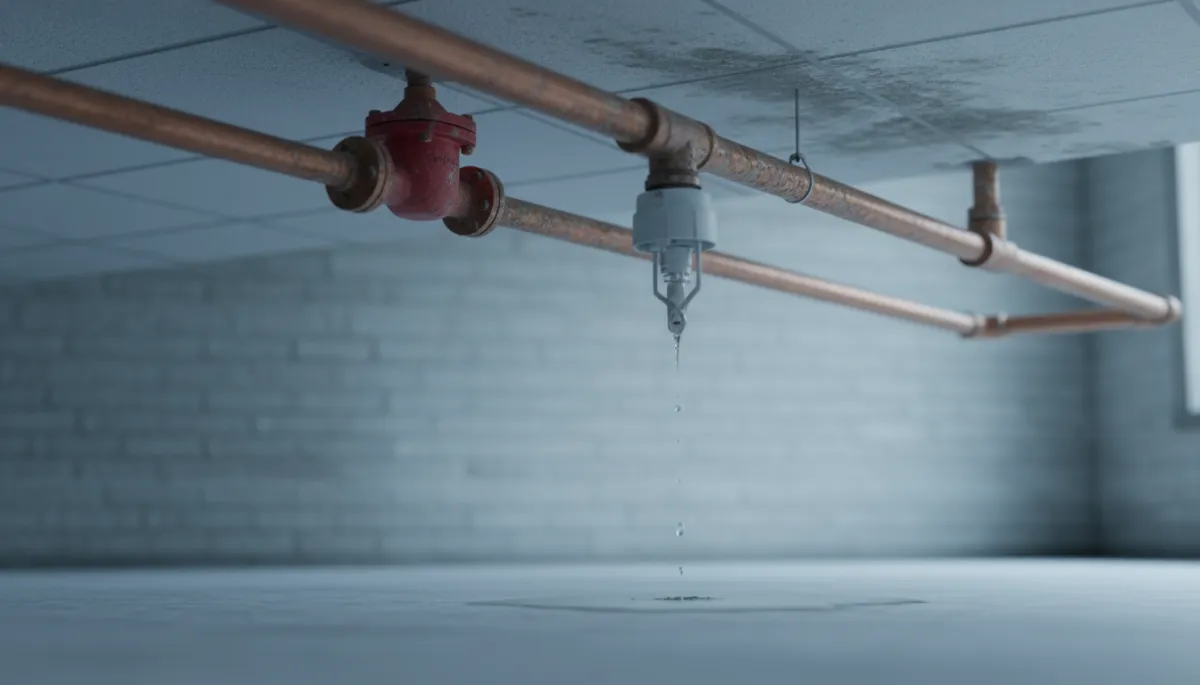
Even minor leaks can point to a larger problem. Look for drips from sprinkler heads, damp ceiling tiles, water stains on walls, or puddles near riser rooms and valves. These symptoms may indicate damaged seals, cracked pipes, or corrosion behind the scenes. Left unresolved, leaks can escalate into pipe bursts, mold growth, or system failure during a fire. Addressing moisture issues promptly protects both your building finishes and the integrity of your fire protection system.
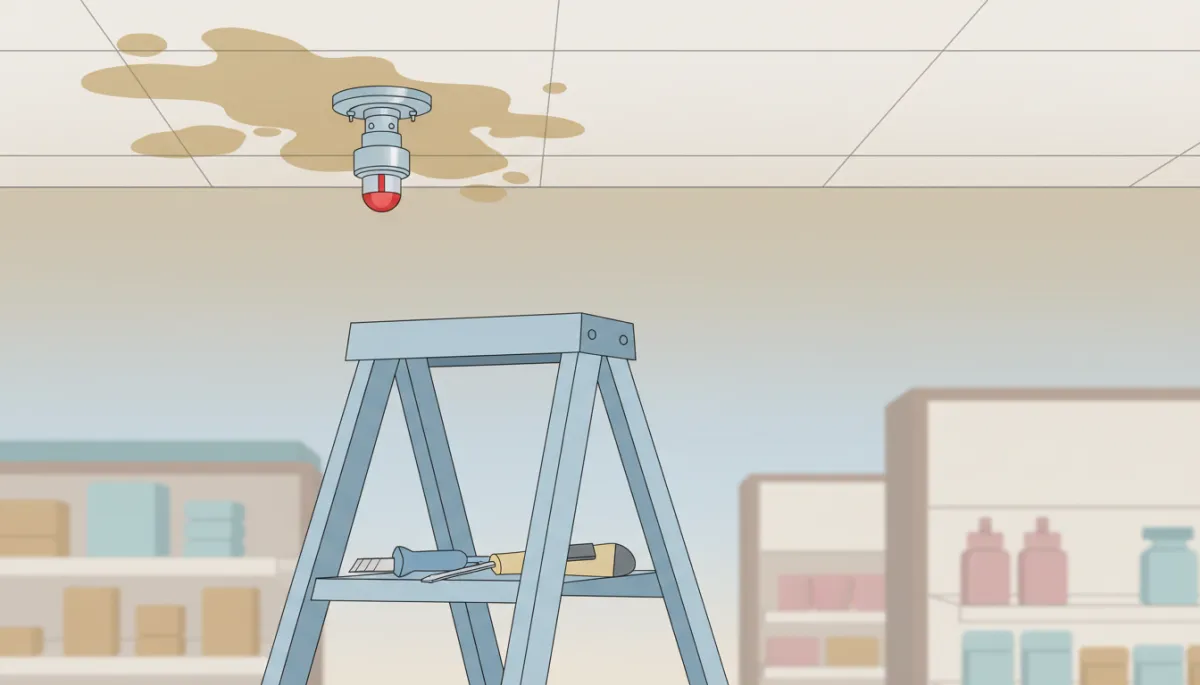
Water stains near sprinklers often reveal hidden leaks that can weaken your system.
3. Obstructions, Paint, or Physical Damage to Sprinkler Heads
For sprinklers to work, they must be able to detect heat and distribute water freely. Common issues in busy workplaces include sprinkler heads painted over during renovations, heads bent by stock or equipment, or items stored too close. If signage, shelving, décor, or stacked inventory block the spray pattern, coverage is compromised. A good rule of thumb is to keep at least 18 inches of clearance below sprinkler heads and never apply paint or tape to the devices themselves. Any damaged or obstructed head should be evaluated and replaced by a qualified technician.
4. Fluctuating or Low Water Pressure and Noisy Pipes
Your sprinkler system relies on sufficient water pressure to control a fire. Warning signs include gurgling or banging noises in pipes, frequent pressure alarms, or gauges that read outside their normal range. Inadequate pressure may stem from closed valves, supply issues, or problems with the fire pump. Because pressure directly affects how far and how evenly water will discharge in an emergency, any irregular readings or unusual sounds warrant prompt investigation by your fire protection service provider.
5. Outdated Inspection Tags or Missing Documentation
Local codes and insurers typically require regular inspections and testing of fire sprinkler systems. If your riser room shows expired tags, missing records, or unfamiliar service stickers, it is a sign your system may not have been inspected on schedule. For local businesses, this can mean citations during fire marshal visits, potential insurance issues, and uncertainty about whether the system will perform as designed. Keeping inspection tags current and records organized is an essential part of managing life safety in your building.
6. Changes to Your Building or Business Use
Renovations, new tenants, or operational changes can all impact how effective your existing sprinkler layout is. If you have added storage racks, reconfigured office space, converted offices to kitchens, or brought in new equipment, your system may no longer provide appropriate coverage. Any significant change in occupancy type, ceiling height, or fuel load is a sign that your sprinklers should be reassessed to confirm they still meet code and adequately protect your people and assets.
7. Frequent False Alarms or Unwanted Activations
False discharges and nuisance alarms disrupt business, damage property, and erode confidence in your life safety systems. If your building experiences sprinkler activations without an actual fire, repeated supervisory alarms, or unexplained system trips, it is a strong indicator that valves, detectors, or control components need attention. A professional evaluation can pinpoint the cause, correct faulty parts, and reduce the risk of both future nuisance events and real failures during an emergency.
📌 Key Takeaway: If something about your sprinkler system looks, sounds, or behaves differently—stains, noises, alarms, or layout changes—it is safer and often less expensive to call for a checkup now than to wait until after a fire or major leak.
Protect Your Business with Proactive Sprinkler Maintenance
For local business owners and property managers, staying alert to these signs is a practical way to safeguard employees, customers, and critical operations. When you spot any of the issues above, partner with a licensed fire protection company to inspect, test, and service your system. Proactive attention today helps ensure that, if a fire ever breaks out, your sprinklers respond exactly as designed—limiting damage, reducing downtime, and keeping your community safer.