
Fire Sprinkler Inspection: What to Expect
Fire Protection, Local Business Safety
What Really Happens During a Fire Sprinkler Inspection for Your Business
Regular fire sprinkler inspections are more than a box to tick for code compliance—they are a critical safeguard for your staff, customers, and property. Here’s what local business owners can expect when a licensed technician inspects their fire sprinkler system.
Why Local Businesses Need Regular Sprinkler Inspections
Whether you run a café, retail store, warehouse, or professional office, your fire sprinkler system is one of the most important safety features in the building. Inspections help you:
Stay compliant with local fire codes, insurance requirements, and health and safety regulations
Catch small issues—like corrosion, leaks, or blocked sprinklers—before they become major hazards or costly repairs
Prove due diligence if there is ever a fire, insurance claim, or safety investigation
💡 Pro Tip: Keep your latest inspection reports in an easily accessible folder or digital file. Fire marshals and insurers often ask for them during audits or after an incident.
Step 1: Pre-Inspection Walkthrough and Paperwork
When the fire protection technician arrives, they will usually begin with a brief walkthrough and review of your system documentation. For most local businesses, this includes:
Confirming the building layout and any recent renovations or changes in how spaces are used (for example, storage added in a back room)
Reviewing previous inspection reports and any noted deficiencies that needed correction
Verifying that the sprinkler riser room, valves, and panels are accessible and not blocked by stock, furniture, or equipment
⚠️ Warning: Blocked access to sprinkler valves and riser rooms is a common violation in small businesses. Keeping these areas clear makes inspections smoother and keeps you compliant.
Step 2: Visual Inspection of Sprinkler Heads and Piping
Next, the technician will visually inspect the sprinkler heads throughout your business. They are looking for anything that could prevent the system from activating correctly, including:
Paint, dust, or grease buildup on sprinkler heads (common in restaurants and kitchens)
Items stored too close to the ceiling that could block water spray, especially in stock rooms or storage areas
Signs of physical damage, corrosion, leaks, or missing components on piping and fittings
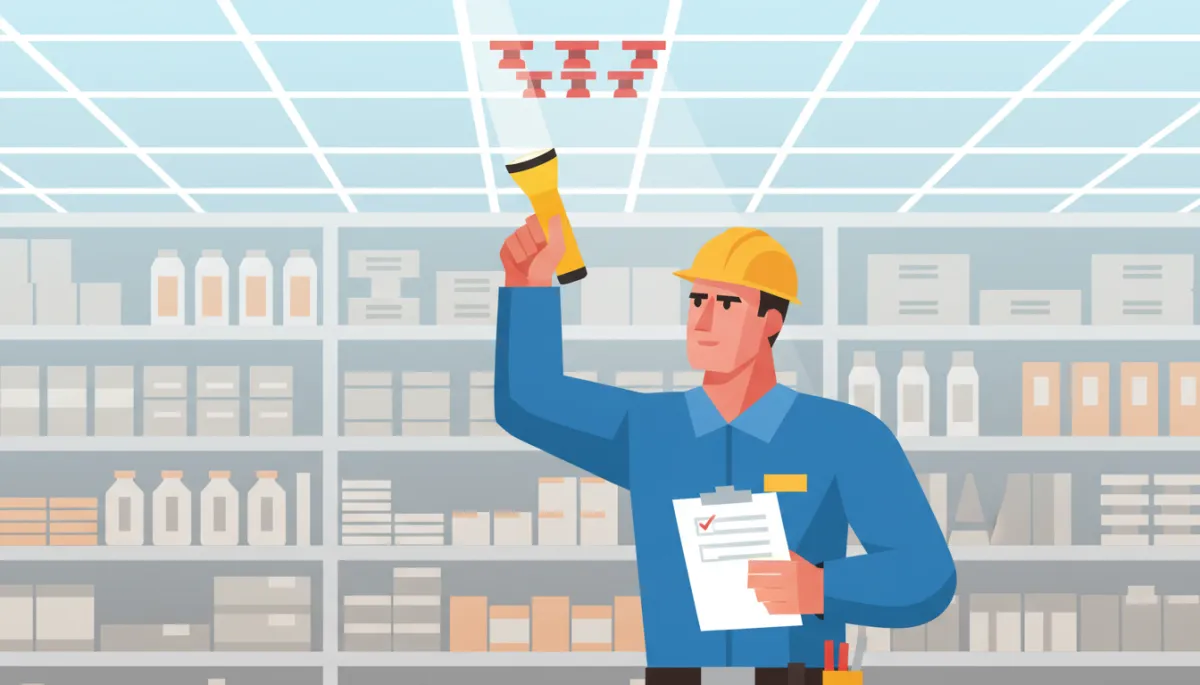
Simple visual checks often reveal blocked, painted, or damaged sprinklers before an emergency.
Step 3: Valve, Gauge, and Alarm Device Checks
In your riser or sprinkler control room, the inspector will examine the “heart” of the system. For a typical local business, this includes:
Ensuring control valves are in the correct open position and properly secured or supervised so they cannot be accidentally shut off
Checking pressure gauges to confirm they are within normal operating range and not damaged or overdue for replacement
Verifying waterflow switches, tamper switches, and alarm devices are in place and appear functional
Depending on your monitoring setup, they may also coordinate briefly with your alarm company to ensure signals are received correctly when devices are tested.
Step 4: Testing Drains, Waterflow, and Alarms
Most inspections include functional tests to confirm the system will respond during a real fire. For many small and mid-sized businesses, this may involve:
Opening test and drain valves to verify adequate water flow and proper drainage away from your business areas
Activating waterflow or alarm test switches to ensure bells, horns, or monitoring systems receive the correct signal
Confirming that any fire department connections are visible, labeled, and accessible from the street or parking lot
💡 Pro Tip for Local Owners: Let your staff know the date and time of the inspection. Brief them that alarms may sound so they are not startled or tempted to silence devices unexpectedly.
Step 5: Post-Inspection Review and Next Steps for Your Business
After the physical checks and tests, the technician will document their findings in an inspection report. As a local business owner or manager, you should expect:
A clear summary of any deficiencies, from minor housekeeping issues to repairs that must be scheduled promptly
An explanation of how each issue affects safety or compliance, in plain language you and your team can understand
Recommended timelines for corrections and a suggested schedule for your next inspection or required tests
Many local fire protection companies will also place an inspection tag on your riser or main valve, showing the date and type of service. This tag is often checked by fire marshals during routine visits.
How Local Businesses Can Prepare Before the Inspector Arrives
A little preparation can make your fire sprinkler inspection faster, less disruptive, and more productive. Before the scheduled visit:
Clear access to riser rooms, valves, panels, and fire department connections outside your building
Make sure ceiling areas are visible where possible, especially in storage rooms and back-of-house areas where clutter tends to build up
Have someone on-site who knows the building layout, alarm panel, and any recent changes to your business operations
Turning Inspections into a Safety Advantage
For local businesses, fire sprinkler inspections are not just a regulatory hurdle. They are an opportunity to strengthen your safety culture, protect your investment, and reassure customers and employees that their wellbeing is a priority. By understanding what happens during a fire sprinkler inspection and preparing in advance, you can turn a routine visit into a powerful safeguard for your business and your community.