
Fire Safety Plan for Property Managers
Fire Safety, Property Management, Local Business
A Simple Fire Safety Maintenance Plan for Busy Property Managers
Local businesses rely on property managers to keep their buildings safe, compliant, and open for trade. A clear, simple fire safety maintenance plan helps you stay on top of legal duties, protect tenants and staff, and avoid costly disruptions — even when your schedule is packed.
Why Local Businesses Need a Simple, Repeatable Plan
For local businesses, a fire incident can mean more than property damage. It can halt trading, impact staff income, and damage community trust. As a busy property manager, you may oversee multiple sites, tenants, and contractors. A straightforward fire safety maintenance plan gives you a repeatable structure you can apply to every building, so nothing slips through the cracks when time is tight.
The goal is not to turn you into a fire engineer. Instead, it is to organise the essential checks, records, and responsibilities in a way that fits naturally into your monthly and quarterly routines, while keeping local shop owners, office tenants, and community services safe and compliant.
Step 1: Know Your Legal Responsibilities and Key Documents
Start by gathering the core documents for each property you manage:
The latest fire risk assessment and any action plan it includes
Maintenance certificates for alarms, emergency lighting, and extinguishers
Floor plans showing escape routes, fire doors, and assembly points
Store these in a single digital folder per property, with clear file names and renewal dates. This makes it easy to answer questions from local businesses, insurers, or enforcing authorities without digging through paperwork at the last minute.
💡 Pro Tip: Create a one-page summary for each building listing key fire safety assets, service dates, and contractor contacts.
Step 2: Break Maintenance into Simple Weekly and Monthly Checks
Busy property managers need tasks that fit into short site visits. Divide your plan into quick visual checks and scheduled contractor visits, and apply the same structure across all local business premises you manage.
Weekly Visual Checks (5–10 minutes per site)
Confirm escape routes, corridors, and stairwells are clear of stock, furniture, or waste.
Ensure fire doors close fully, are not wedged open, and display correct signage.
Check extinguishers are accessible, mounted correctly, and show no obvious damage.
Monthly System Checks
Test the fire alarm call points on a rotating basis and record results in the logbook.
Operate emergency lighting test switches briefly to confirm lights function.
Walk escape routes with tenants, pointing out exits and assembly points.
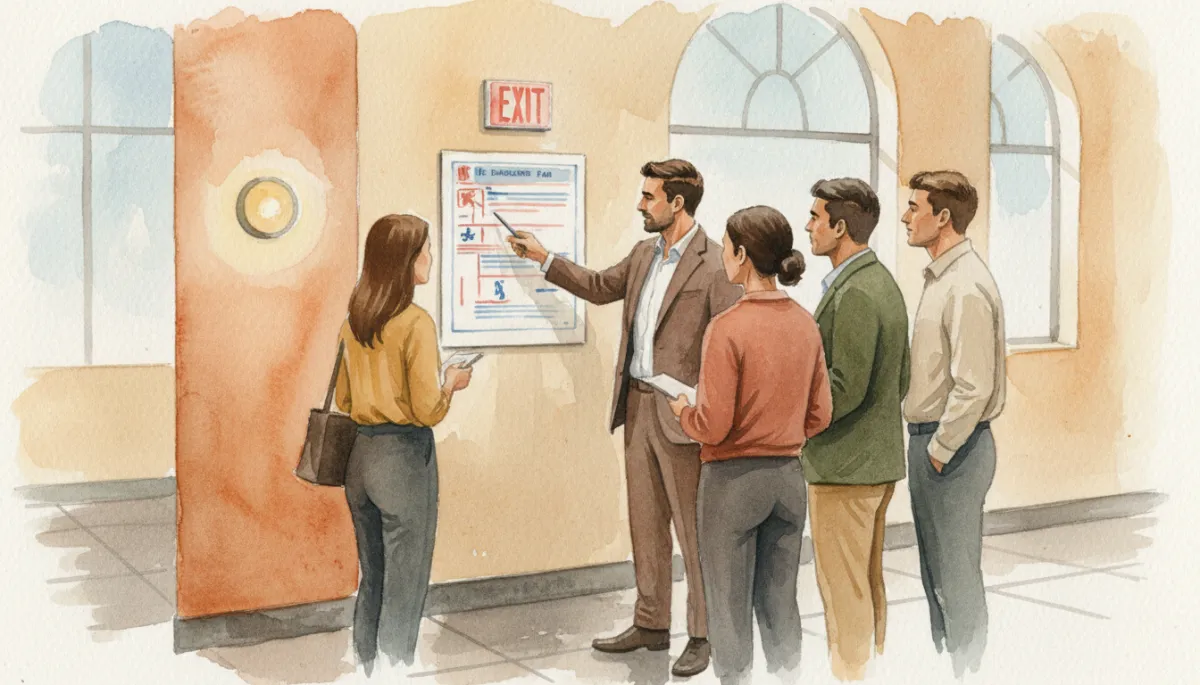
Brief walk-throughs help local businesses understand escape routes and assembly points.
Step 3: Schedule Annual Services and Tenant Training
For busy property managers, the easiest way to stay ahead is to block out annual and biannual tasks at the start of the year. Work with competent contractors to service alarms, emergency lighting, extinguishers, and sprinkler systems where installed. Share service dates with your local business tenants so they can plan around any brief disruptions.
Alongside technical servicing, schedule at least one fire drill per year for each multi-occupancy building. Use these drills to reinforce simple instructions: how to raise the alarm, where to exit, and where to assemble. A short debrief afterwards helps you identify blocked routes, confusion, or delays that could be critical in a real incident.
Step 4: Communicate Clearly and Keep Records Simple
Local businesses appreciate clear, concise communication. Summarise your fire safety maintenance plan in everyday language and share it with tenants when they move in and at each renewal. Use short checklists and simple forms so staff can log weekly tests or report issues quickly.
Keep digital copies of logbooks, test records, and service reports. This not only demonstrates compliance if you are audited, but also allows you to spot patterns, such as repeated false alarms or recurring faults, before they disrupt trading or compromise safety.
Turning Fire Safety into a Manageable Routine
A simple fire safety maintenance plan does not have to add hours to your week. By organising responsibilities into clear weekly, monthly, and annual actions, you can protect the local businesses you serve, meet your legal obligations, and reduce the risk of unexpected shutdowns. With a structured approach, fire safety becomes part of your regular property management routine, not another overwhelming task on your to-do list.