
Essential Fire Protection Tasks for Property Managers
Fire Safety, Property Management, Local Businesses
Fire Protection Tasks Property Managers Should Never Put Off
For local businesses, a small fire can quickly become a major disaster. Property managers sit at the center of prevention, responsible for day‑to‑day fire protection tasks that keep people safe, protect assets, and satisfy insurance and legal requirements.
Why Fire Protection Matters So Much for Local Businesses
Independent retailers, offices, restaurants, and service providers often operate on tight margins. A single fire can mean weeks of closure, lost customers, and costly repairs. For property managers overseeing these spaces, proactive fire protection is not just a compliance box to tick; it is a core part of risk management and tenant care.
Local businesses rely on you to maintain safe premises, coordinate with qualified fire protection professionals, and ensure that every system will work when it is needed most. Delayed maintenance or skipped inspections can quickly turn into legal liability and reputational damage for both owners and managers.
Fire Protection Tasks You Should Never Delay
1. Scheduled Inspections of Fire Extinguishers
Fire extinguishers are often the first line of defense for a small fire in a shop, office, or storage room. Property managers should ensure:
Monthly visual checks for pressure, damage, and clear access
Annual inspections and tagging by a licensed fire protection company
Replacement of expired or discharged units without delay
2. Testing Fire Alarm and Detection Systems
For multi‑tenant commercial properties, reliable alarms are essential to give staff and customers time to evacuate. Property managers should:
Arrange regular system testing with a certified fire protection provider
Keep records of all tests for insurers and local fire authorities
Act quickly on any faults or trouble signals reported by monitoring centers
3. Maintaining Sprinkler and Suppression Systems
In many jurisdictions, sprinklers are mandatory in larger commercial buildings. For restaurants and food businesses, kitchen hood suppression systems are equally critical. Postponing inspections or repairs can invalidate insurance coverage and put tenants at serious risk.
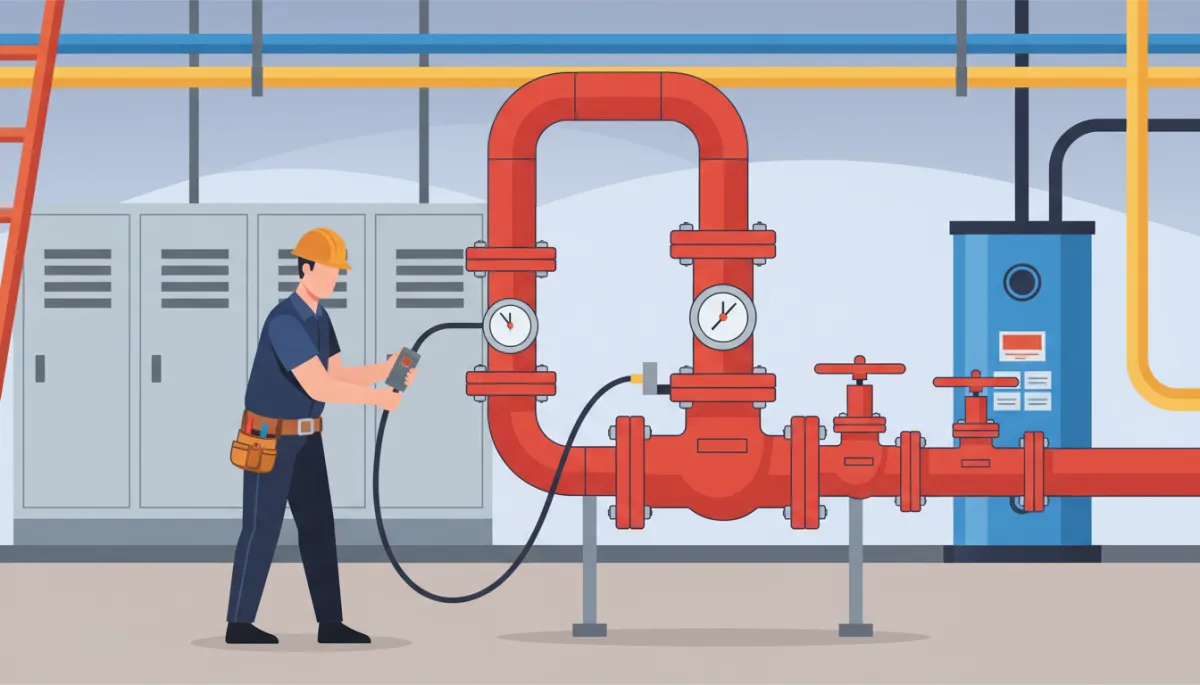
Regular sprinkler testing ensures local businesses are protected long before an emergency.
4. Keeping Exits, Signage, and Lighting Clear
During busy seasons, it is easy for stock, displays, or furniture to creep into exit routes. Property managers should walk common areas regularly to confirm that:
Exit doors open freely and are not locked or blocked
Emergency lighting and illuminated exit signs are functioning
Corridors and stairwells remain clear of storage and waste
5. Training Tenants and Staff on Emergency Procedures
Even the best fire protection equipment is only effective if people know what to do. Property managers can support local businesses by coordinating:
Periodic fire drills during business hours to test evacuation routes
Clear, written emergency procedures shared with every tenant
Basic fire extinguisher awareness training where appropriate
💡 Pro Tip: Add fire protection tasks to a recurring property management calendar so inspections, tests, and tenant communications never slip through the cracks.
Turning Compliance into a Competitive Advantage
When property managers stay ahead of fire protection tasks, they do more than meet code. They demonstrate professionalism, build trust with local business tenants, and help ensure that shops, offices, and restaurants can operate safely and confidently every day. In a competitive commercial market, a strong safety record can be a powerful selling point for your properties.
Partnering with qualified fire protection specialists, maintaining clear documentation, and never postponing critical tasks will help protect your buildings, your tenants, and your reputation for the long term.