Who Installs Commercial Kitchen Fire Suppression Systems?

A commercial kitchen fire suppression system is not a line item your general contractor can hand off to whoever is cheapest and available. It is a life-safety system governed by federal fire codes, California building law, and the specific requirements of the authority having jurisdiction in your county. And getting it wrong can stop your project cold at final inspection.
The Short Answer: A Licensed Fire Protection Contractor
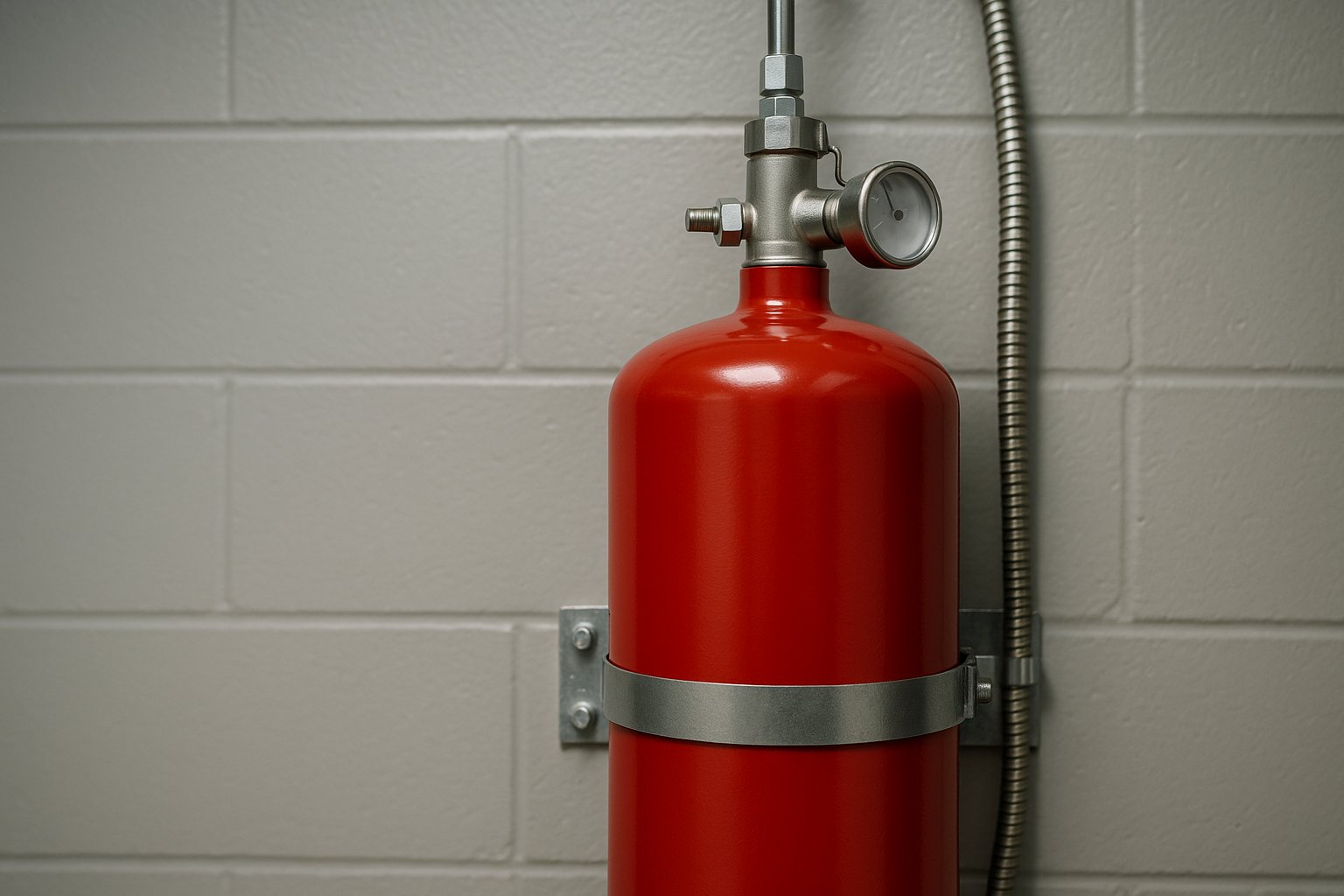
The design and installation of a commercial kitchen fire suppression system must be handled by a ==licensed fire protection contractor== with direct, documented experience in restaurant and industrial cooking environments. Not your hood fabricator. Not your restaurant equipment dealer. Not a general plumbing or mechanical contractor who has done a few kitchen projects.
"A commercial kitchen suppression system is a life-safety installation governed by NFPA 17A, NFPA 96, and the specific plan-check requirements of your local AHJ. The wrong contractor choice costs you the certificate of occupancy."
These systems must comply with NFPA 17A (wet chemical extinguishing systems), NFPA 96 (ventilation control and fire protection of commercial cooking operations), and any local fire code amendments enforced by the fire department and building department in your jurisdiction. In Southern California, that means navigating the specific submittal requirements, approval timelines, and field inspection standards of the authority having jurisdiction in San Diego, Orange, Riverside, or San Bernardino County. Each of which has its own process, and none of which are forgiving of incomplete plan submittals.
What a Qualified Contractor Actually Does
A qualified commercial kitchen fire suppression contractor does not just show up and mount a cylinder to the wall. The work spans every phase of the system's life, and every phase has to be done correctly for the system to pass inspection and actually function when it is needed.
Hazard analysis and system design. Before a single component is ordered, the contractor evaluates the cooking operations in the kitchen: the appliance types, fuel sources, BTU output, hood and duct geometry, makeup air configuration, and exhaust volume. This determines the hazard class of the cooking operation and drives every downstream design decision. Nozzle placement, agent quantity, piping layout, and tank sizing.
UL-listed system selection. Commercial kitchen suppression systems must use ==UL 300-listed== wet chemical agent systems. The contractor selects a listed system whose coverage specifications are matched to the specific appliances being protected. A system sized and nozzled for a flat griddle is not the same as one protecting a fryer battery or a solid-fuel broiler. The selection has to be documented and submitted with the permit package.
Engineering drawings and permit submittals. The contractor prepares stamped drawings showing nozzle placement, piping runs, agent distribution, and all required clearances. These are submitted to the AHJ for plan check. In Southern California, an incomplete or code-deficient submittal triggers a correction cycle that can add weeks to a project timeline. Contractors with established AHJ relationships and current familiarity with local plan-check standards get through this step faster and with fewer correction rounds.
Coordination with mechanical and electrical trades. A commercial kitchen suppression system does not operate in isolation. The system must be integrated with the hood and ductwork, the gas supply (automatic gas shutoff valve activated on system discharge), and the electrical system (shutdown of cooking equipment on discharge). A fire protection contractor who can coordinate these integrations. Or who is working alongside a GC who can. Is essential. Missed integrations are a common cause of failed final inspections.
Installation, testing, and commissioning. The contractor installs all components, verifies nozzle placement against the approved drawings, tests the detection system, confirms the mechanical and electrical interlocks function correctly, and documents everything for the inspection record. The AHJ will require a witnessed acceptance test before issuing final approval.
Ongoing inspections and maintenance. NFPA 96 requires that commercial kitchen suppression systems be inspected by a qualified contractor at least every six months. The inspection covers agent quantity, nozzle condition, fusible link replacement, detection integrity, and interlock function. These records must be maintained and made available to the AHJ and your insurance carrier on demand.
Why the Vendor Fragmentation Model Fails in Commercial Kitchens
One of the most common and costly mistakes in commercial kitchen buildouts is splitting the fire suppression work across multiple parties. Letting the hood fabricator handle the ductwork, the equipment dealer specify the suppression system, and a third contractor pull the permit. Each party assumes someone else owns the coordination between their scope and the next one.
"The most expensive fire suppression mistake is not the system itself. It is the failed inspection caused by a gas interlock nobody confirmed was wired, or a nozzle placement nobody verified against the approved drawings."
The result is a project where nobody has a complete picture of the system design, nobody has confirmed the integrations are code-compliant, and nobody is accountable when the AHJ issues a correction notice two weeks before your planned opening. The cost of that delay. In lost rent, extended construction loans, or penalty clauses. Almost always exceeds the cost of hiring a single accountable contractor from the start.
A single fire protection contractor who handles design, permitting, installation, and ongoing inspection owns every phase. There are no handoffs between vendors, no gaps in accountability, and no finger-pointing when something needs to be corrected.
What Southern California Property Managers Need to Know
For commercial property managers in San Diego, Orange, Riverside, and San Bernardino Counties, the AHJ landscape is not uniform. Each jurisdiction has its own plan-check process, its own inspection scheduling, and its own interpretation of how state and NFPA codes apply locally. A fire protection contractor who has worked extensively in these counties. And who has established working relationships with local fire marshals and building officials. Navigates this environment materially faster than a contractor who is learning a new AHJ on your project.
California's Title 19 and the California Fire Code layer additional requirements on top of NFPA standards, and local amendments can add further specificity. Contractors who are current on these requirements. And who stay current as they change. Protect their clients from the compliance gaps that trigger re-submittals, failed inspections, and insurance complications.
For multi-site property managers, the stakes are compounded. A kitchen suppression system that passes inspection at one location under one contractor, then fails at another location under a different contractor because of a different interpretation of the same code requirement, is a direct result of fragmented vendor relationships. A single contractor managing all your locations applies consistent standards and documentation across your entire portfolio.
^^ The right fire protection contractor does not just install a system. They own the compliance outcome from permit submittal through every semi-annual inspection your insurer will ever ask to see.
What to Ask Before You Hire
When evaluating a fire protection contractor for a commercial kitchen suppression project, these are the questions that separate a qualified partner from a vendor who will cost you time and money at inspection:
Are you licensed as a fire protection contractor in California? This is the baseline. A C-16 fire protection contractor license is required for this work in California. Verify it.
Have you pulled permits with the AHJ for this specific jurisdiction? Prior experience with the local plan-check process is a material advantage. Ask how many projects they have completed in that county and whether they have existing relationships with the local fire marshal's office.
Do you handle the full scope. Design, permitting, installation, and ongoing inspections? If the answer is anything other than yes, you are going to be coordinating between vendors. That coordination risk belongs to you, not them.
Can you provide documentation of prior commercial kitchen installations? Experience across diverse cooking operations. Fryers, broilers, woks, solid-fuel equipment. Is not the same as experience with a standard flat-top griddle setup. The hazard class and system requirements differ significantly.
What is your inspection and service response time in this area? Semi-annual inspections are code-required. Emergency service calls happen. A contractor with field presence in your county responds faster than one dispatching from a distant service center.
Alternative Fire Protection Service: Full-Lifecycle Kitchen Suppression in Southern California
Alternative Fire Protection Service has been designing and installing fire protection systems across Southern California since 1987. Over 40 years of fire sprinkler design and installation expertise, with full in-house capability spanning design, fabrication, installation, service, and inspections. No subcontractor handoffs. Single-source accountability from design through ongoing inspection.
For commercial kitchen fire suppression, that means one contractor handles the hazard analysis, the UL 300-listed system design, the permit submittal to your local AHJ, the installation and commissioning, and every semi-annual inspection required to keep your system compliant and your documentation current. Clients in San Diego, Orange, Riverside, and San Bernardino Counties benefit from decades-long working relationships with local AHJs. Relationships that translate directly into faster plan-check approvals and fewer correction cycles on your project.
If you are planning a kitchen buildout, a tenant improvement, or a suppression system upgrade, the time to engage a fire protection contractor is before your GC submits for permit. Not after a correction notice arrives.
Schedule a free compliance assessment for your property, or request a turnkey fire protection quote that covers design through inspection. Contact Alternative Fire Protection Service to get started.
Frequently Asked Questions
What type of fire suppression system is required for a commercial kitchen? Commercial kitchens with cooking equipment that produces grease-laden vapors are required to have a UL 300-listed wet chemical fire suppression system installed in the hood and duct above the cooking appliances. These systems must comply with NFPA 17A and NFPA 96, and must be matched to the specific appliances and hazard class of the cooking operation. Dry chemical systems and older pre-UL 300 systems are no longer compliant for most commercial cooking applications.
How often does a commercial kitchen suppression system need to be inspected? NFPA 96 requires that commercial kitchen fire suppression systems be inspected and serviced by a qualified contractor at least every six months. Some high-volume cooking operations or jurisdictions may require more frequent inspections. Inspection records must be maintained on-site and made available to the AHJ and your insurance carrier on request.
Who pulls the permit for a commercial kitchen suppression system in California? The licensed fire protection contractor performing the design and installation is responsible for preparing and submitting the permit application and engineering drawings to the authority having jurisdiction. The AHJ reviews the submittal for code compliance, issues corrections if required, and schedules a field inspection before issuing final approval. A contractor with prior experience in your specific county can navigate this process significantly faster than one unfamiliar with local plan-check requirements.
Can the hood manufacturer or restaurant equipment dealer install the suppression system? No. In California, the design and installation of a fire suppression system requires a licensed fire protection contractor holding a C-16 license. Hood fabricators and restaurant equipment dealers are not licensed to perform this work, and a system installed without proper licensure and permitting will not pass inspection and will not be covered by your property insurance in the event of a fire.
What happens if a commercial kitchen suppression system fails inspection? A failed inspection typically results in a correction notice from the AHJ identifying the specific deficiencies that must be remediated before re-inspection. Depending on the nature of the deficiency, corrections may range from a nozzle repositioning to a complete redesign of the agent distribution system. Each correction cycle adds time and cost to the project. Working with a contractor who has current knowledge of local code requirements and a track record with the specific AHJ significantly reduces the risk of a failed inspection.
Research sources 8
Live web research informed this article. These are the sources it drew on.
- Alternativ | Brussels - Facebook facebook.com
- Alternativ: Renovation, fitting out of your offices or workspaces alternativ.be 2025-11-13
- ALTERNATIV | Retail Apparel and Fashion linkedin.com
- Brandfetch Alternative: Logo.dev's Image URL API logo.dev
- About Google Business Profile & brand profile support.google.com
- Alternatives linkedin.com
- Brand Profile Overview help.marketing360.com
- Welches Markenmodell bringt deine Marke ganz nach vorn? brand-doctor.net 2024-04-08